

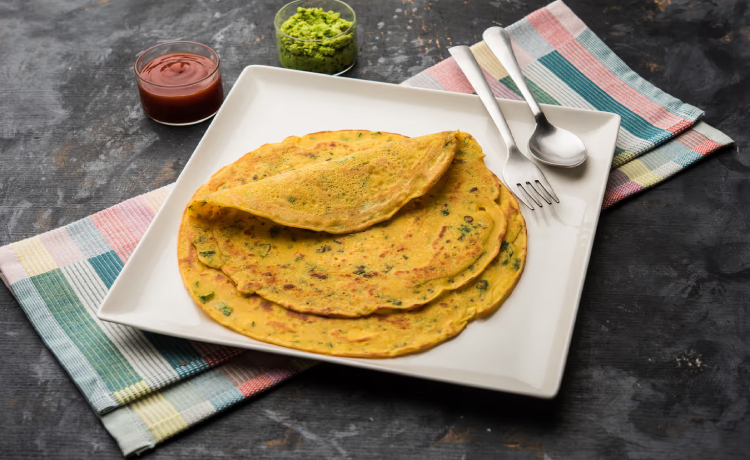
In a country where the humble Roti has long been a symbol of an all-comprising food, Indian kitchens have been in a silent yet swift metamorphosis- one that is protein-rich, gut-friendly, and very tasty. Welcome to the world of cheelas, sprouts, millets, and moong where traditions amass to form a modern nutritional philosophy.
Roti Was Once the Monarch
Rotis, or whole-wheat breads, have been the food of the masses. Being a rich source of carbohydrates, they make one feel heavy. Unfortunately, they lack protein, another important macronutrient for muscle-building, metabolism, and general well-being. As awareness builds up concerning balanced diets and their role in lifestyle diseases, the families are beginning to review what foods adorn their plates.
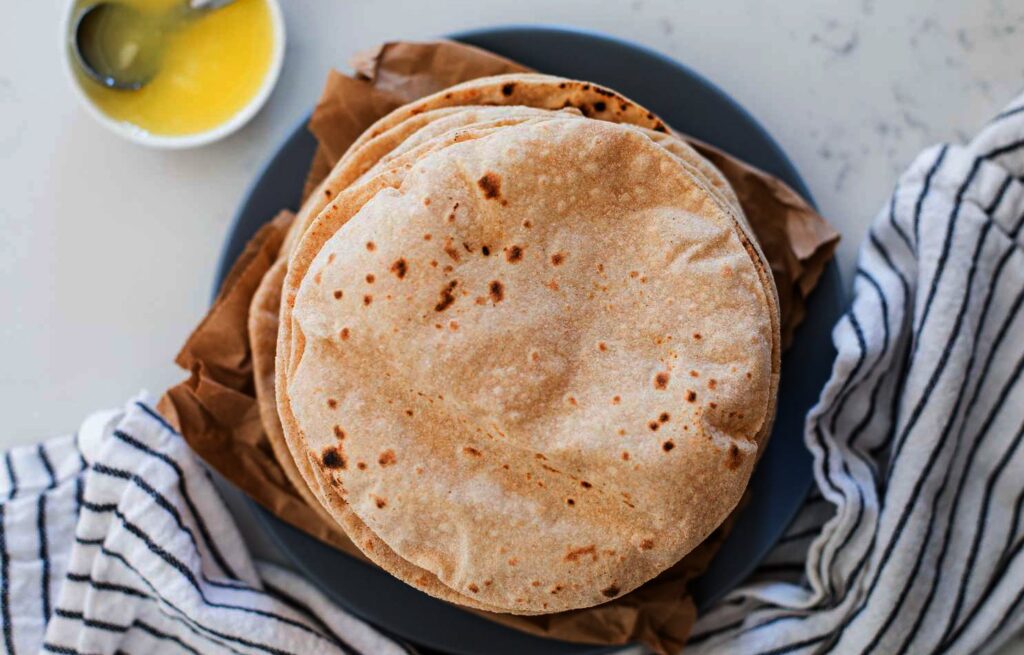
Roti? The Cheela Cast in Another Role: Desi Delight Packed With Protein
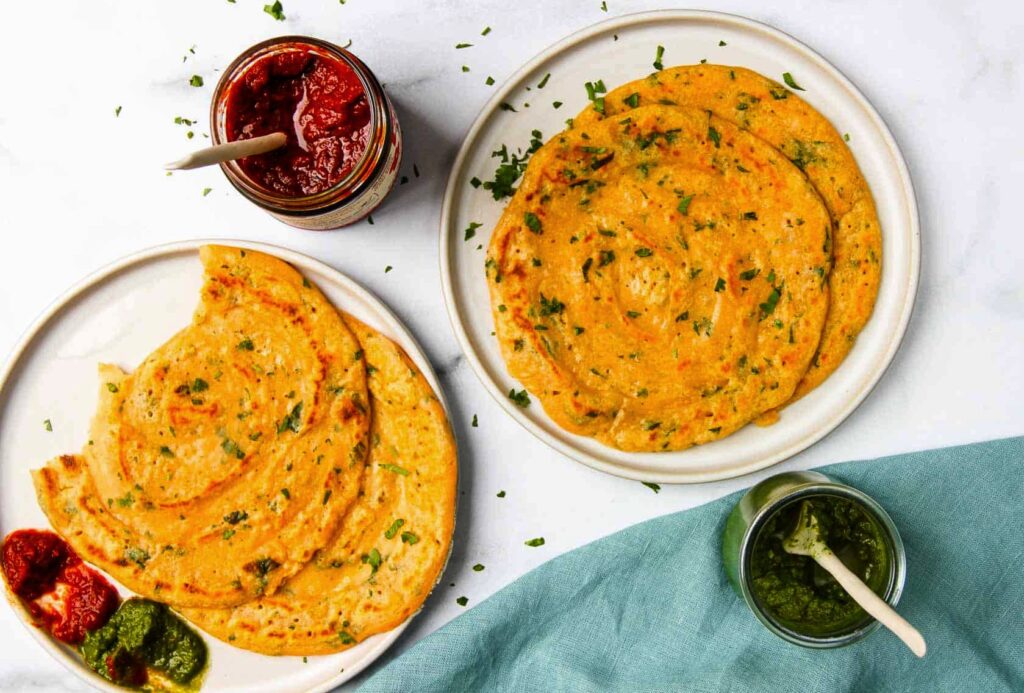
Cheelas, the savory Indian pancakes made from lentils like moong dal, chana dal, or besan, are fast becoming a substitute for rotis in many health-conscious homes. They are not just excellent sources of protein, but also gluten-free and easy on the digestive system.Inside go the chopped veggies, herbs, and spices for a quick customizable meal to be eaten at breakfast, lunch, or dinner.
Desi Protein Guide: Top Vegetarian Sources of Protein
For vegetarians in India, protein is everywhere — you just need to look beyond supplements. Lentils like moong, masoor, and chana dal are desi protein powerhouses, while paneer, curd, and milk offer rich dairy-based options. Soy chunks, tofu, and besan (gram flour) add variety and density. Add nuts, seeds, and sprouted legumes for extra punch. Combine cereals with pulses — like rice with dal or roti with besan sabzi — for complete amino acid profiles. Smart, traditional combinations are already protein-rich. No powders needed — just go back to the thali!
Grandma’s Wisdom, Modern Plate: Reclaiming Lost Indian Superfoods
Before quinoa and chia made it big, our grandmothers were already cooking with ragi, bajra, kulthi, amaranth, sabut moong, and moth beans — nutrient-dense Indian superfoods. These traditional grains and pulses are rich in protein, fiber, iron, and antioxidants, perfect for modern health goals. Once sidelined by refined wheat and rice, they’re now making a comeback in cheelas, rotis, khichdi, and laddoos. By blending ancestral wisdom with modern nutrition science, we can make meals that heal, energize, and connect us to our roots. Grandma was right — the best superfoods were always in our kitchen.
The Millet Movement
Another shift has been the re-emergence of millets such as ragi, jowar, and bajra. These ancient grains are naturally high in protein and fiber and thus provide an excellent alternative to refined wheat flour. Millets are now being used for making rotis, dosas, and even desserts-thus becoming a favorite among urban kitchens and dietitians!
More Than Just a Trend: Why Such a Shift Matters
Better satiety: High-protein meals keep you full longer preventing binging.
Weight management: Proteins spike the metabolism and help in fat loss.
Muscle building: With the sedentary lifestyle getting more higher protein is needed to maintain lean muscle mass.
Blood sugar control: Pulses and millets have a slow release of energy, assisting in the management of insulin spikes.
A Little Change For A Bigger Impact
Instead of 3 rotis for dinner, families are now trying things like:
Moong dal cheela with curd
Sprouted chana or moong salads
Besan or ragi dosas
Jowar or bajra rotis
Paneer bhurji wrapped in millet flour parathas
Last Bite
This change is not just about protein and meat consumption. It is about reclaiming health through ancient traditional wisdom. There are ways to embrace ancient grains and lentils, and the generation of innovative Indian dishes that influence our daily lives today where we make frontal choices that are delicious and nutritious. A cheela packed with protein may just be the appropriate substitute for the roti your body is seeking! If you are looking to exercise, manage a lifestyle-disease, or simply eat better, a protein-rich cheela may just be a proper substitute for the roti your body has been looking for!
Are you ready to take the plunge? Try a masala moong cheela with mint chutney this week, and you may just realize that you have a new favorite!

Five Colors of Travel भारत का एक भरोसेमंद Hindi Travel Blog है जहां आप ऑफबीट डेस्टिनेशन, culture, food, lifestyle और travel tips की authentic जानकारी पढ़ते हैं